
How to Protect Your Boundaries and Women's Rights – A Practical Guide
Setting boundaries is not selfish – it's required. Too many women struggle with this concept, however, feeling guilty when they say no or fearful of being the "bad guy" if they stand up for themselves. The truth is that upholding your boundaries is one of the most important ways of safeguarding your rights as a woman.
Boundaries are not walls that keep others out. They're guidelines that show others how to treat you with respect. When you create healthy boundaries, you're not just protecting your energy and time – you're asserting your basic rights to dignity, respect, and fair treatment.
Understanding the Connection Between Boundaries and Rights
Your rights and your boundaries are nearer to one another than you can imagine. When you've defined your boundary, and someone continues to cross it, they are usually also invading your rights. It happens in workplaces where managers ignore your "no" to unwanted advances, in relationships where partners ignore your need for space, and on the street where people infringe upon your boundaries.
Think of it this way: your right to harassment-free work starts with your ability to define what kind of behavior is not acceptable. Your right to equal treatment starts with refusing to accept anything less than you deserve. Your right to safety starts with establishing boundaries around whom you will permit access to your time, space, and emotional energy.
Workplace Boundaries That Protect Your Rights

Your work environment is typically where women have the most difficulty establishing boundaries. You might feel like you're constantly being asked to agree to every demand, working extra hours compared to your male colleagues, or tolerating unwanted comments to be perceived as "not difficult."
Start by getting clear on your role description and responsibilities. If someone asks you to work outside the scope of your job, you can reply, "I'd be glad to assist after I finish my current priorities. Can we discuss timeline and how this fits into my current workload?" This is not being rude – it's professional boundary-setting that protects your right to equal working conditions.
Personal Relationships and Emotional Boundaries
Setting boundaries in one's personal relationships can look even more daunting. You might worry about hurting someone else's feelings or breaking up the relationship. But healthy relationships get stronger when everyone's boundaries are honored.
Practice a strong "no" without explaining it to death. "I can't do that right now" is a sentence. You don't owe anyone a lengthy explanation to protect your energy and time. This is especially important for women, who tend to be socialized to explain their options more than men.
Digital Boundaries in the Modern World
Technology has created new boundary-establishing problems. You might feel like responding to messages immediately when you receive them, posting more about yourself than you'd prefer, or tolerating online harassment because "it's just the internet."
Your digital boundaries are just as important as your physical ones. Set definitive times when you're available for work communications. Turn off notifications outside of work time. Block or mute people who make you uncomfortable on the web. Your privacy and sense of well-being don't just evaporate because you're using technology.
When Boundaries Aren't Enough
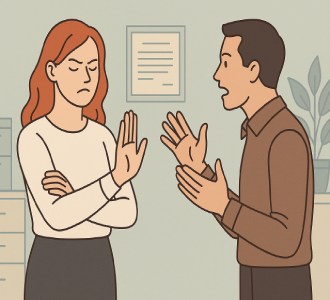
Sometimes, despite your best efforts to communicate your boundaries, people continue to violate them. This is when boundary-setting becomes rights protection. Document repeated violations. Seek support from HR, supervisors, or trusted friends and family. Know when it's time to involve legal protections.
Remember that you are not responsible for how others react to your boundaries. Some will push, some will respect them immediately. Your job is to maintain them at all times, not to manage other people's feelings about them.
Building Your Boundary-Setting Skills
Like any skill, boundary-setting comes naturally with practice. Start small with low-risk interactions. Practice your responses ahead of time. Notice what it feels like to stand up for your own interests without shame.
Surround yourself with others who model healthy boundary-setting. Watch for confident women in your life whom people respect – chances are, they're good at setting boundaries. Take a lesson from them.
The Ripple Effect
When you stand up for your boundaries, you're not only serving yourself – you're helping to create a culture in which all women's rights are valued. Each time you say no to settling for less than you deserve, you're making it that much easier for the next woman to do the same.
Your boundaries are significant because you're significant. They are not invitations or offers to open negotiations – they are expectations of how you wish to be treated. And that is not too much to ask. It's what you're worth.
Supporter & Rights Defender

On June 25, 2025, DEFAW proudly hosted its first public event in London, graciously supported by the Malala Fund
— Farima Nawabi 🇦🇫 (@FamNawabi) June 28, 2025
The conference, titled "Global Action Against Gender Apartheid in Afghanistan"
@Malala pic.twitter.com/0y3m3WwF6M